
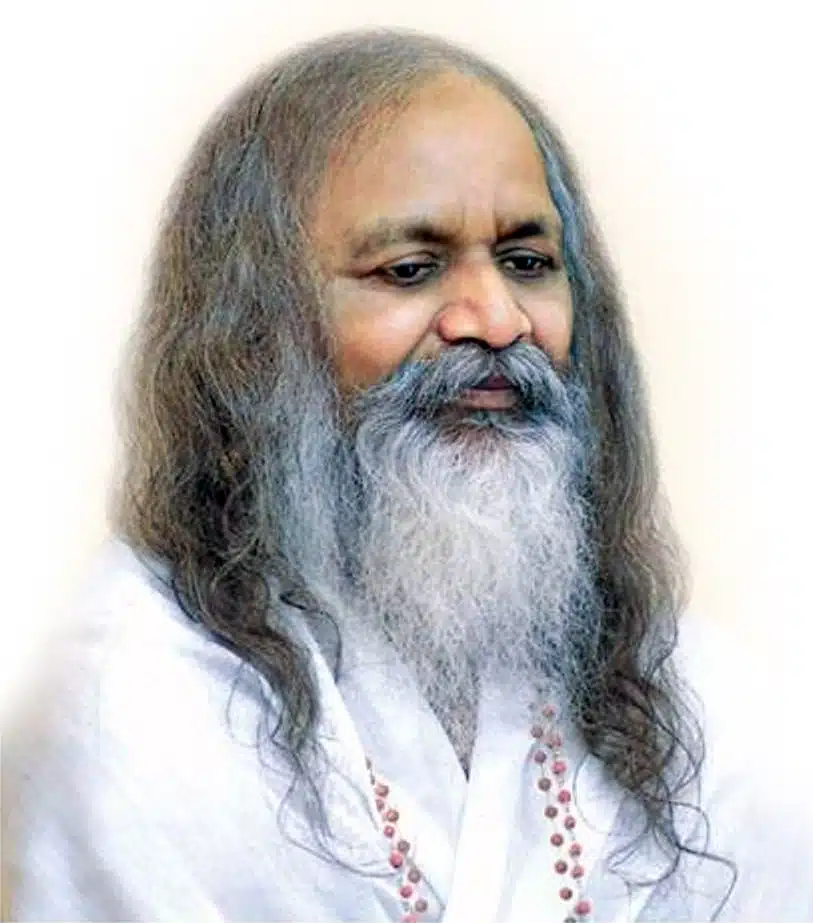
 Founded by Maharishi
Mahesh Yogi
Founded by MaharishiA Major Shift in Cardiovascular Prevention as Transcendental Meditation® is included in the American Heart Association (AHA) and American College of Cardiology (ACC) 2025 High Blood Pressure Guidelines
For the first time, the American Heart Association (AHA) and American College of Cardiology (ACC) have formally recognised psychosocial stress as a key contributors to high blood pressure and cardiometabolic risk in their 2025 hypertension guideline. This represents a major shift in medical practice. The guideline now places psychological stress alongside traditional biomedical and lifestyle factors as risk factors of hypertension.
Within this new framework, the guideline identifies Transcendental Meditation (TM) as a validated, standardised method to address psychosocial stress. TM is the only meditation technique included, reflecting extensive evidence for its physiological and clinical benefits.
The guideline states:
“In adults with or without hypertension, stress reduction through Transcendental Meditation may be reasonable to prevent or treat elevated blood pressure and hypertension, as an adjunct to lifestyle or medication interventions.”
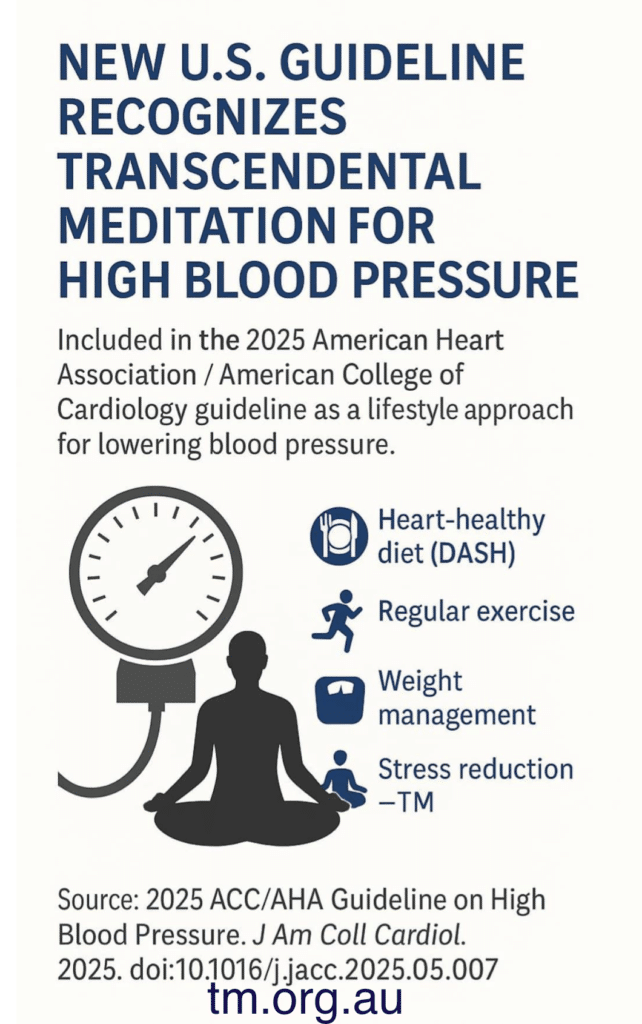
Key Lifestyle Modifications to Reduce High Blood Pressure
(AHA/ACC 2025 and Nature Reviews Cardiology 2025)
Why It Matters
Hypertension remains one of the leading preventable drivers of cardiovascular disease worldwide. While lifestyle modifications are universal recommendations, stress reduction has long been underused despite strong evidence linking psychosocial stress with autonomic imbalance, inflammation, vascular dysfunction, and cardiometabolic deterioration. The new 2025 AHA/ACC guideline elevates stress reduction and TM from a discretionary wellness practice to a validated, guideline-supported intervention that addresses physiological stress directly. This provides clinicians with a practical, scalable tool that strengthens cardiovascular resilience and enhances both preventive and therapeutic care
Global Significance of Stress in Cardiovascular Disease
Psychosocial stress contributes substantially to global cardiovascular morbidity through its effects on autonomic dysregulation, hypothalamic–pituitary–adrenal activation, inflammatory processes, and endothelial dysfunction. TM’s formal recognition in the 2025 AHA/ACC guideline fills a critical gap by offering clinicians a scientifically grounded and standardized stress reduction intervention that improves blood pressure regulation and supports cardiometabolic health.
Expert Comment in Nature Reviews Cardiology
A new invited commentary, Transcendental Meditation to Combat Psychosocial Stress, Hypertension and Cardiovascular Disease, was published in Nature Reviews Cardiology, the highest-impact cardiovascular journal worldwide. Authored by Robert H. Schneider, MD, FACC, Institute for Natural Medicine and Prevention, Maharishi International University; Keith C. Norris, MD, PhD, Department of Medicine, David Geffen School of Medicine at UCLA; and Robert D. Brook, MD, Department of Internal Medicine, Wayne State University School of Medicine, the article provides a comprehensive scientific, clinical, and public-health framework for understanding TM’s role in cardiovascular prevention.
Clinical Evidence
More than three decades of peer-reviewed research document that TM produces sustained reductions in systolic and diastolic blood pressure. Randomized controlled trials have demonstrated reductions in myocardial infarction, stroke, and all-cause mortality; slowed progression of carotid atherosclerosis; myocardial ischemia and diabetes. These results support TM as a clinically meaningful lifestyle modification as part of standard hypertension management.

Mechanisms of Action
TM reduces sympathetic nervous system activity and stress hormones while modulating parasympathetic tone and autonomic stability. Neuroimaging studies show enhanced coherence in self-regulatory brain networks and reduced activation of stress-related regions.
TM has also been associated with improved vascular structure and function and reductions in and cardiometabolic disease biomarkers. Together, these findings illuminate the interconnected biological pathways through which TM supports cardiovascular health.
Precision Public Health
The TM technique is a standardized, validated and easy to implement mind-body practice, contributing to its high adherence across diverse populations—including groups disproportionately affected by psychosocial stress and cardiovascular disparities. Its adaptability across clinical, community, workplace, and school settings positions TM as a valuable public-health tool capable of bridging individual patient care and population-level prevention strategies.
Clinical Integration and Practical Application
Clinicians may consider recommending TM for individuals with elevated blood pressure or with metabolic risk, and adults seeking evidence-based non-pharmacologic approaches that complement standard care. TM integrates well into primary care, cardiology, behavioral health, preventive health programs, and group-visit models, with improvements typically emerging within four to twelve weeks of regular practice.
Conclusion
The inclusion of Transcendental Meditation in the 2025 AHA/ACC hypertension guideline—together with the framework of scientific and clinical analysis presented in Nature Reviews Cardiology—represents a substantial advance for cardiovascular prevention. TM is now positioned as a validated, evidence-based method that reduces physiological stress, enhances autonomic and vascular function, and strengthens the foundation of modern preventive cardiology.
There are more than 700 research studies validating the benefits of Transcendental Meditation to improve creativity, clear thinking and higher IQ. To find out how TM can benefit you contact your local certified TM teacher at tm.org.au.