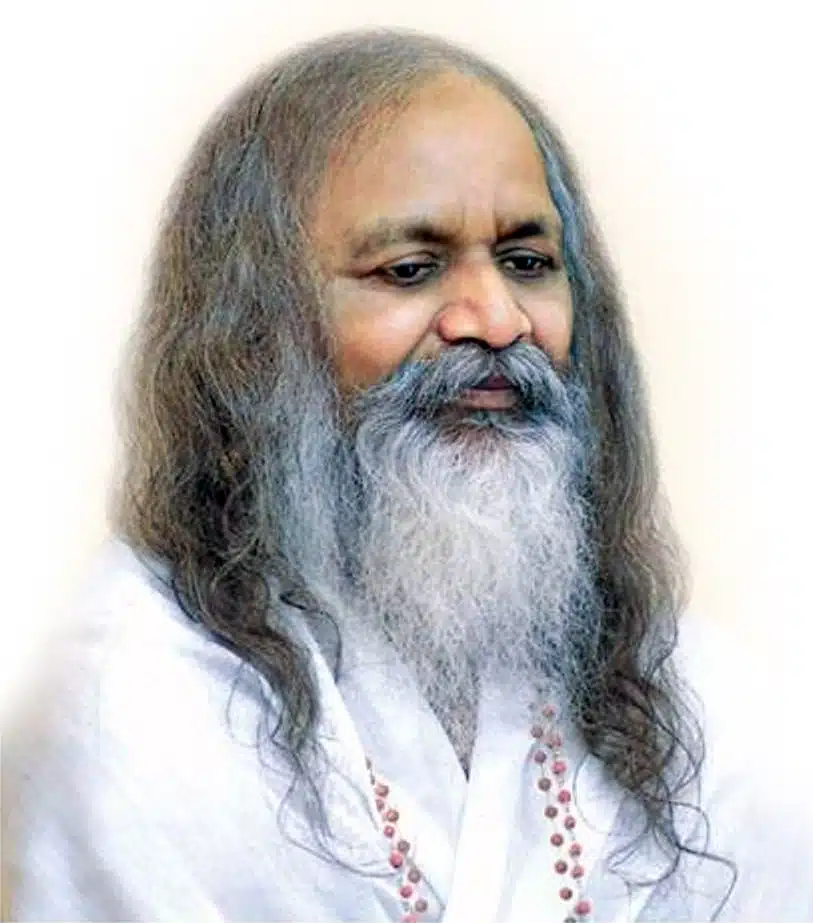
 Founded by Maharishi
Mahesh Yogi
Founded by MaharishiA neuroscientist says the Transcendental Meditation® technique rewires the brain functioning to a coherent and orderly manner to increase cognitive function leading to calm, clarity and better decision making.
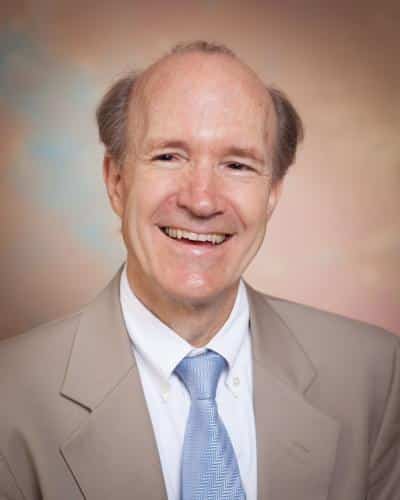
Speaking with the host of Stillness in Success podcast, Mustafa Nuristani, Dr Fred Travis, the author of Your Brain is a River, not a Rock, said every meditation has unique effects on the mind, body and behaviour.
According to scientists, there are three distinct categories of meditation programs, such as Focused Attention, Open Monitoring and Automatic Self Transcending.
“Every meditation is exploring inner subjectivity, but they do so with different procedures,” said Dr Travis.
“The term Focused Attention refers to Vipassana, Zen, Compassion Meditation, it’s any meditation, which tries to restrict what the mind is focusing on by keeping it focused on one thing,” he said.
“Like in Vipassana, you focus on the breath moving in and out until that completely fills awareness.”
“And what’s found in these meditations, what you see is the EEG (Electroencephalography), which monitors brain wave activity, of focusing and using cognitive processes called Gamma. It’s very fast… and this is the frequency band also of being aware of outside experiences.”
Dr Travis said the Focused Attention category of meditation practices require maximum effort. The second category of meditation practices, which also involves effort, is called Open Monitoring.
“In Open Monitoring rather than restricting what you’re experiencing – keeping focus on one thing in the mind – you allow all experiences to pass through awareness, but you do so with an open attitude,” Dr Travis said.
“It’s non-judgmental. You don’t try to control it; you don’t try to fix it. You just note it and let it go. Mindfulness is in this category, also Zazen,” he said.
“And what you see when the mind is just following ongoing mental processing, you see a different brainwave called Theta. It comes from the hippocampus and memory centres.
“And this is seen in all memory tasks that you’re doing. It’s seen whenever you’re following internal mental processing. And this is a brainwave you see during the Open Monitory category of meditation practices.”
Dr Travis said there is also a third category of meditation practices, which involves no effort, and it’s called Automatic Self Transcending. Transcendental Meditation is the only technique in this category.
“In this meditation, you start with thinking, but then you end up with Being… almost like a wave settling down to an ocean,” Dr Travis said.
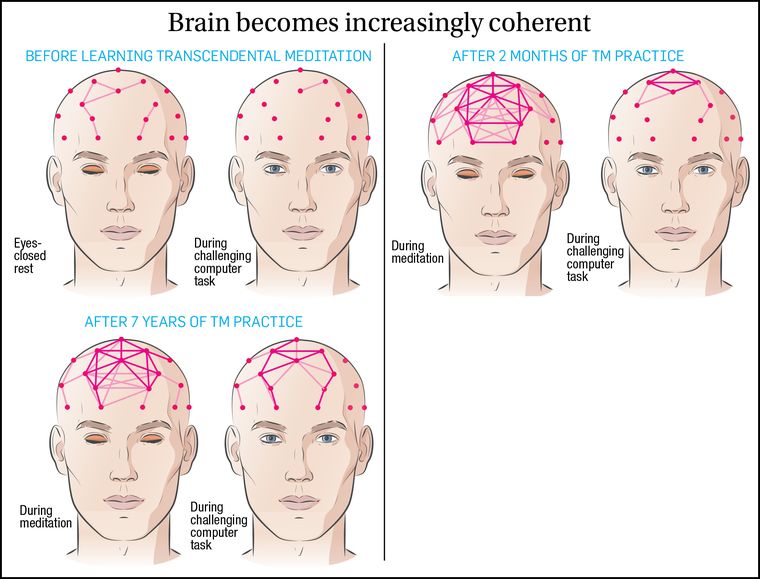
“And the brainwave is different because the procedures are different. It’s called Alpha one. It’s the lower end of the Alpha band, and it’s primarily seen in the front of the brain. And it’s associated with higher blood flow,” he said.
“It’s associated with wakefulness, not the wakefulness of thinking and processing that would be Gamma, but rather the wakefulness of just being alert.
“So, with these different frequency bands, what we have is a physiological way to explore different meditations and their effects.”
Sleep versus TM
Dr Travis said that sleep has a whole different purpose compared to the experience of transcending in Transcendental Meditation.
“The brainwaves are different in sleep. It’s a very large slow wave. It’s called Delta. It goes up and down one time per second during the deepest parts of sleep,” Dr Travis said.

“What’s actually happening is the brain is getting rid of the effects of daily activity. It’s called sleep dirt, because when the brain is processing the world, it’s using neurotransmitters and transporter molecules and these break down because they’re being used and reused.”
He said the residue of the breakdown process, known as the metabolites, just sit in the brain and science refers to this as “sleep dirt”.
“You make about seven grams of sleep dirt a day. And now this is not due to stress. It’s not dysfunctional. It’s just that you’re using relative structures. Seven grams fills a teaspoon,” Dr Travis said.
“And what happens during sleep? You’re not aware of the outside world, but also, there’s no sense of Self during sleep… And then you wake up and you realize you’re coming up from blackness,” he said.
“But it’s during that time the support cells, the glial cells, the white blood cells, the astrocytes, that are around the neurons, recede from the neuron, so the space around the neuron is larger.”
“And what it does, it pulls the cerebral spinal fluid, interstitial fluid, over the neuron, and washes out the sleep dirt. This is what sleep is doing. It’s a huge process, and that’s completely different from TM.”
Dr Travis said during TM, one does not have content, which is similar to sleep, but “what you do have is awareness”.
“And you become less lost in the ongoing experience, a sense of self, of wholeness, silence, stability, evenness, is being added to every experience… you’re more centred, you’re less affected by what’s going on,” Dr Travis said.
“You enjoy things more, you have a bigger perspective, and so on. That’s what transcending during TM is doing. Sleep is important. It’s keeping the body going, but TM has a whole different purpose.”
TM enhances brain function
Dr Travis said during the TM practice the boss of the brain, the prefrontal cortex, which is behind the forehead, “directs our day-to-day world”.
“That’s the Association Cortex. It gets information from the back of the brain, which is where all senses come in, emotional centres, memory centres and puts it together. It directs our day-to-day world,” Dr Travis said.
“It takes the past and future. It keeps values going. This part of the brain begins to slow down about nine o’clock at night. So, if you try to do complex work after 9pm, you can’t do it,” he said.
“The brain circuits are not there for it. Also, if you’re under high stress, the prefrontal cortex goes offline and you get tunnel vision. That is, you see things really clearly, but it’s only what’s in front of you. You just don’t have the big picture.”
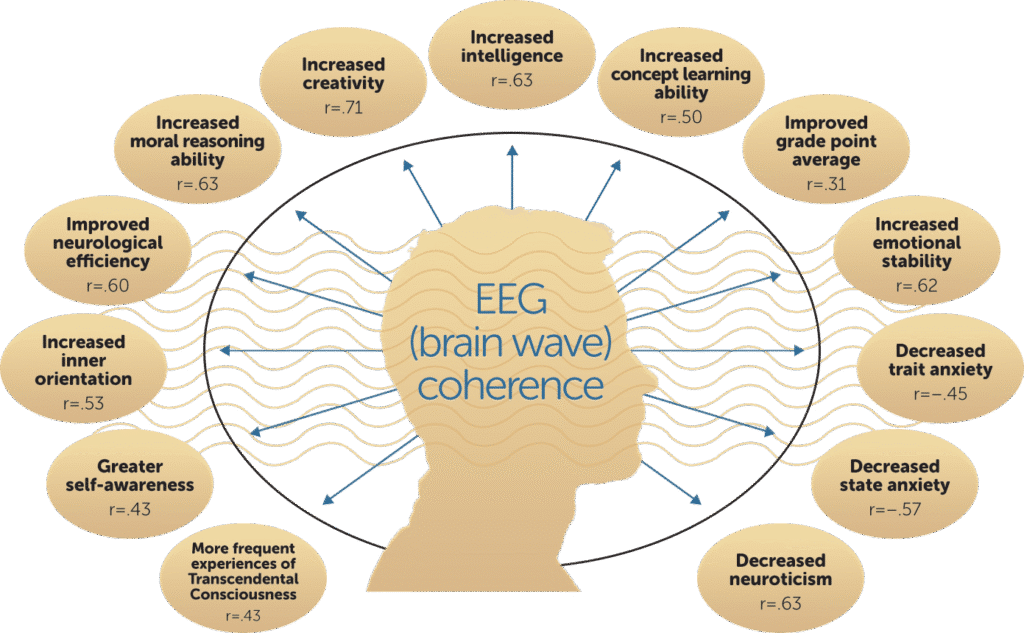
“What Transcendental Meditation does is it uniquely affects the prefrontal cortex. What we see is the connectivity of that part of the brain is higher during TM practice, and that continues when you’re out in activity.”
He said during TM, the blood flow to the prefrontal cortex is higher, but to the rest of the brain it’s lower, which is called a state of “restful alertness”.
“Restful alertness is completely different from rest, from sleep, completely different from being at the ball game and there are four seconds left and your team has the ball. It’s not that alert. It’s restful alertness,” Dr Travis said.
“It’s that quiet, expanded silence, which then allows you to dive into activity. And gaining that state has all those benefits, because now you’re not lost, you’re not overshadowed in activity,” he said.
“Somehow, you’re as if you’ve taken a step back, you have this bigger picture.”
Research shows that Transcendental Meditation helps alleviate the symptoms of ADHD, which is caused by lack of blood flow to the prefrontal cortex.
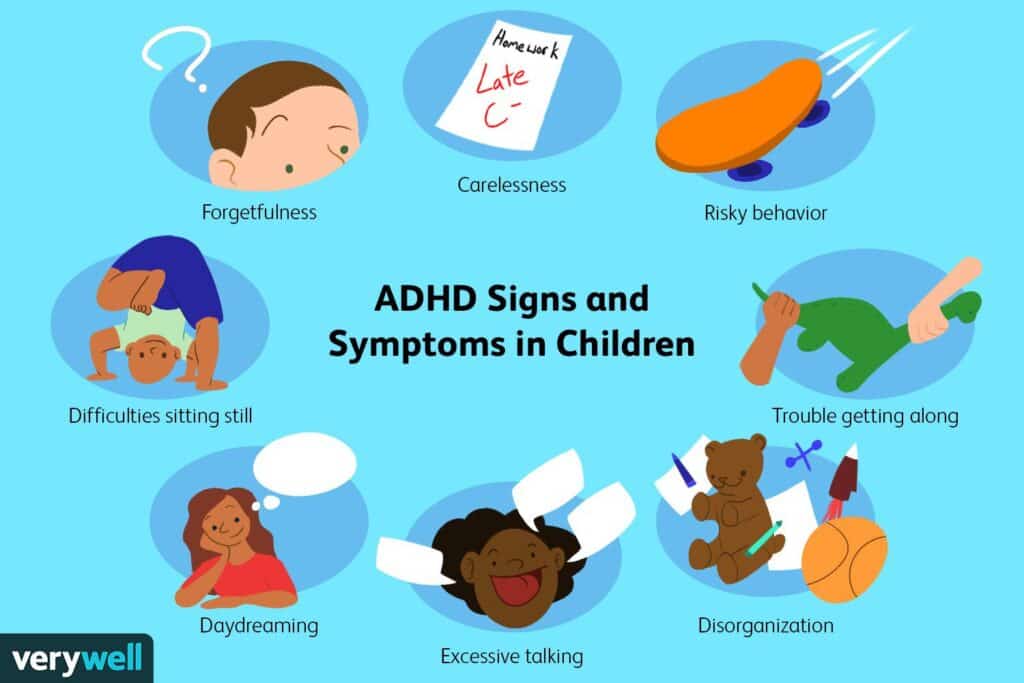
According to the Centre for Disease C (CDC) Control and Prevention, there are three distinct symptoms of ADHD – Attention Deficit/Hyperactive Disorder.
Predominantly Inattentive Presentation
Inattentive behaviour where it is difficult for the “individual to organize or finish a task, to pay attention to details, or to follow instructions or conversations”.
“The person is easily distracted or forgets details of daily routines,” according to the CDC website.
Predominantly Hyperactive-Impulsive Presentation
The individual diagnosed with ADHD also “fidgets and talks a lot. It is hard to sit still for long (for example, for a meal or while doing homework).”
“Smaller children may run, jump or climb constantly. The individual feels restless and has trouble with impulsivity. Someone who is impulsive may interrupt others a lot, grab things from people, or speak at inappropriate times,” the CDC site said.
“It is hard for the person to wait their turn or listen to directions. A person with impulsiveness may have more accidents and injuries than others.”
Combined Presentation
Symptoms of the above two types are equally present in the person.
On the contrary during TM the mind gains calm and clarity. Ability to focus increases and the individual regains composure. The ability to perform tasks easily and efficiently also increases.
Transcendental Meditation increases blood flow to the executive function of the brain, the prefrontal cortex, which creates a state of calm and focus where the individual experiences stillness with expanded awareness.
There are more than 700 research studies validating the benefits of Transcendental Meditation making it the single more research technique available. To learn more visit: tm.org.au.