 Founded by Maharishi
Mahesh Yogi
Founded by MaharishiWhat helps people become the best version of themselves — especially during times of change, uncertainty or stress?
For leadership development specialist Clair Turner, the answer begins with something simple but often overlooked: accepting humanness.
Speaking on the Stillness and Success podcast, Clair shared how empathy, adaptability and the practice of Transcendental Meditation® (TM) have shaped her approach to helping individuals and teams navigate change — and reconnect with their own clarity and confidence.
Her work sits at the intersection of leadership coaching, behavioural science and personal growth — helping people move forward when they feel stuck.
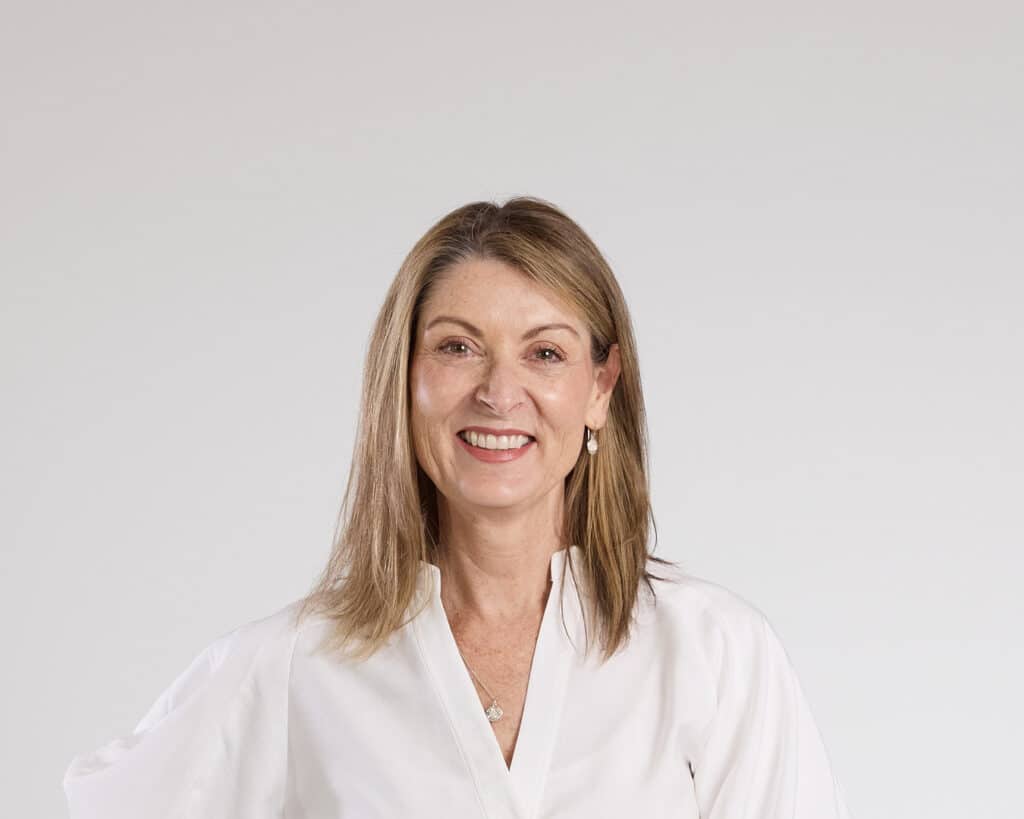
Clair Turner works in leadership development, helping individuals and senior teams improve performance, communication and decision-making.
Her career has spanned multiple industries — including project management, healthcare, counselling and organisational development — giving her a broad and practical understanding of human behaviour in the workplace.
“I’m probably best described as very human and very pragmatic,” she said.
That balance, she explains, allows people to feel safe enough to examine their own patterns and explore new ways of thinking.
“A lot of my work is about helping people prioritise looking at themselves — and learning something new.”
One recurring pattern Clair sees in leadership coaching is how strongly people identify with their professional roles.
“Work is a really big part of people’s lives,” she said.
When careers shift — through organisational change or personal reflection — many people struggle with a loss of identity.
“I used to be this, and now I’m not,” she explained.
Part of her role involves helping people separate self-worth from job titles and rediscover their value beyond work.
Clair describes herself less as a fixer and more as a mirror.
Sometimes clients arrive knowing something isn’t working — but without clarity about what needs to change.
“I put opportunities in front of them and reflect back what I’m seeing,” she said.
In one example, she worked closely with a senior leader who felt deeply unhappy in her role.
After attending a leadership conference together, the insight emerged naturally.
“She said, ‘I need to leave, don’t I?’” Clair recalled.
“She realised it herself — and eventually found something she was really happy with.”
For Clair, these moments are powerful because the decision belongs entirely to the individual.
Change can be uncomfortable, even when it leads to growth.
Clair believes this resistance has biological roots.
“The human brain is designed for survival,” she said.
People tend to repeat familiar behaviours because established neural pathways feel safer and more predictable.
Building new ways of thinking often requires structured support — tools, processes and evidence-based approaches that allow change to feel manageable.
“It’s about helping people build capability and confidence,” she said.
Much of Clair’s work happens in professional settings, but the human element is always present.
“It’s a privilege to work with someone when they’re vulnerable,” she said.
Watching clients grow and develop flexibility is one of the most rewarding aspects of her work.
“I know what a relief it is to become more adaptable,” she said.
Her own background — growing up in a highly structured environment — helped shape this perspective.
“Learning flexibility and adaptability has been one of my biggest strengths.”
Clair began practising Transcendental Meditation in her early twenties after experiencing a period of illness when conventional medical options were limited.
“I tried many different approaches, and TM was hugely beneficial,” she said.
She credits consistent practice — supported by group meditation and community — with helping her establish a strong foundation.
“The discipline of meditating twice a day was fundamental.”
For Clair, meditation doesn’t eliminate life’s challenges — but changes the way she responds to them.
“It’s like a little holiday,” she said.
“That second meditation each day feels like a reset.”
She describes the practice as helping her transition between responsibilities, especially since she balances both professional work and caregiving at home.
“It helps me respond really well to life and events.”
Recently, Clair received news that her sister had been in a serious car accident — a situation that would once have felt overwhelming.
Instead, she noticed a very different response.
“I didn’t go into fear or drama,” she said.
“I went straight to gratitude that she was okay.”
That calm presence not only helped her process the situation clearly — it also provided comfort to her sister.
“She didn’t have to worry about me,” Clair said.
During the conversation, Clair reflected on the balance between rational thinking and emotional intelligence.
“Rational processes are really helpful — if you’re calm,” she said.
When the nervous system is settled, decisions become clearer and more thoughtful.
At the same time, she sees leadership as deeply human.
“Sometimes it’s just about love — caring for another human being.”
Her perspective mirrors what many TM practitioners report: when stress reduces, intuition becomes clearer and decision-making feels more natural.
Clair doesn’t describe herself as an expert with all the answers — but as someone continually evolving.
“I’m not an expert at it. I’m just adaptive,” she said.
That adaptability, she believes, is a quality the wider world could benefit from.
“The human race might do better — and be kinder — if we were a bit more adaptable.”
Transcendental Meditation is a simple, natural technique practised for 20 minutes twice daily. Many practitioners report reduced stress, improved clarity and greater resilience in everyday life.
To learn more about Transcendental Meditation (TM) and upcoming courses, visit tm.org.au.